
What Is SEO and How Does It Work? A Complete Beginner’s Guide for 2026
Introduction
If you have a website, blog, online store, or business website, you have probably heard about SEO. Many beginners ask the same question: What is SEO and how does it work? Understanding SEO is important because it helps websites get more visitors from search engines without paying for ads.
Today, millions of websites compete for attention online. Every second, people search for information, products, and services on search engines like Google. If your website does not appear in search results, potential visitors may never find your content. This is where SEO becomes essential.
In this detailed guide, you will learn what is SEO and how does it work, why it matters, its main components, and how beginners can start optimizing their websites for better rankings.
What Is SEO?
SEO stands for Search Engine Optimization. It is the process of improving a website so that it ranks higher in search engine results pages (SERPs).
The primary goal of SEO is to increase organic traffic. Organic traffic refers to visitors who come to your website naturally through search engine results rather than through paid advertisements.
For example, if someone searches for “best digital marketing tips” and your article appears on the first page of Google, users are more likely to click on your website. SEO helps make that possible.
When people ask, what is SEO and how does it work, the simplest answer is that SEO helps search engines understand your content and show it to the right audience.
Why Is SEO Important?
SEO plays a crucial role in online success. Whether you run a personal blog or a large business website, SEO can help you achieve your goals.
Increases Organic Traffic
Search engines are one of the largest sources of website traffic. Good SEO can bring thousands of visitors without paying for every click.
Builds Trust and Credibility
Users generally trust websites that appear on the first page of Google. Higher rankings often create a perception of authority and reliability.
Improves User Experience
Modern SEO focuses on user satisfaction. Faster loading pages, mobile-friendly designs, and useful content improve the overall experience.
Provides Long-Term Results
Unlike paid advertising, SEO can continue driving traffic for months or even years after content is published.
Increases Sales and Leads
More visibility often means more visitors, which can lead to more inquiries, sales, subscribers, and customers.
How Do Search Engines Work?
To understand what is SEO and how does it work, you must first understand how search engines operate.
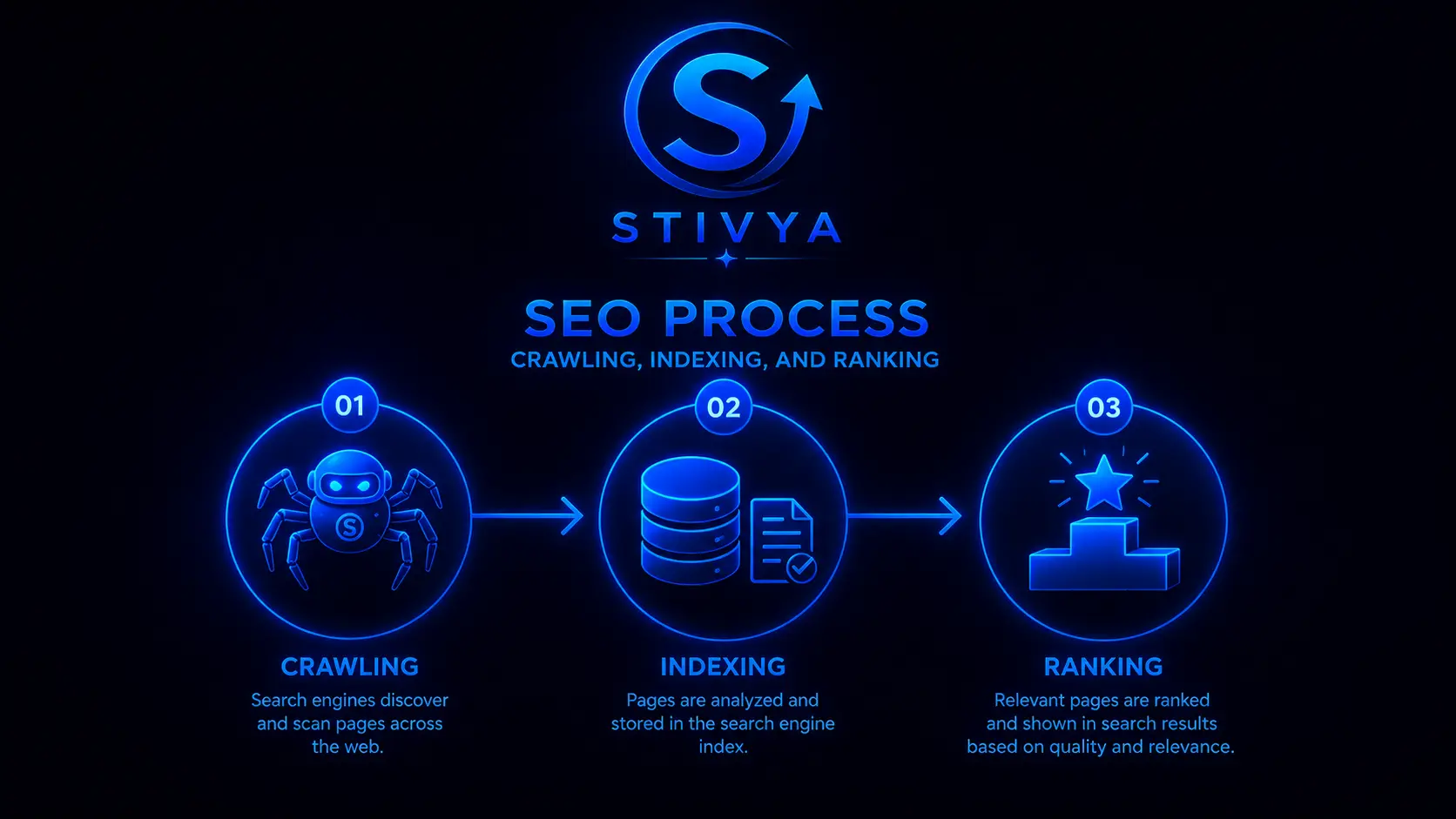
Search engines follow three main steps:
Crawling
Search engines use bots, often called spiders or crawlers, to discover content across the internet.
These bots move from page to page by following links and collecting information.
Indexing
After discovering content, search engines store and organize the information in a massive database known as an index.
Pages that are indexed can appear in search results.
Ranking
When someone performs a search, search engines analyze thousands of factors to determine which pages should appear first.
The goal is to provide the most relevant and useful results to users.
Main Types of SEO
SEO is divided into several categories. Understanding each one is important for creating a successful strategy.
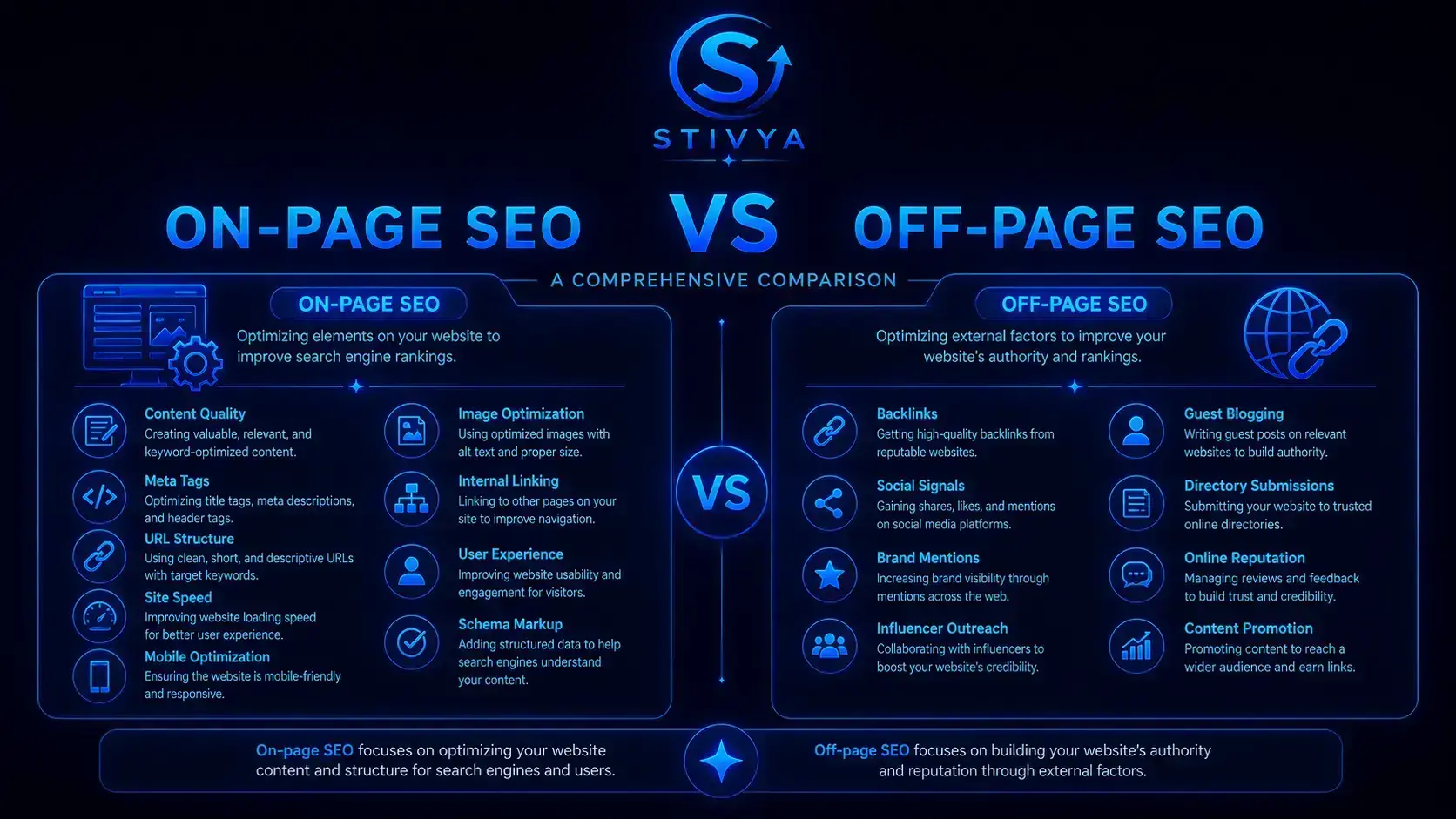
On-Page SEO
On-page SEO refers to optimization activities performed directly on your website.
Keyword Optimization
Using relevant keywords naturally throughout your content helps search engines understand the topic.
Title Tags
The title tag is one of the most important ranking factors. It tells users and search engines what the page is about.
Meta Descriptions
A compelling meta description can improve click-through rates from search results.
Internal Linking
Internal links help visitors navigate your website and help search engines discover important pages.
Content Quality
High-quality, informative, and engaging content remains the foundation of successful SEO.
Off-Page SEO
Off-page SEO focuses on activities outside your website.
Backlinks
Backlinks are links from other websites pointing to your site. They act as votes of confidence.
Brand Mentions
Search engines often consider brand mentions as signals of authority and trust.
Social Signals
Although social media is not a direct ranking factor, it can increase visibility and drive traffic.
Technical SEO
Technical SEO focuses on website performance and structure.
Website Speed
Fast-loading websites provide better user experiences and often perform better in search results.
Mobile Friendliness
Most users browse on mobile devices. Responsive websites are essential.
Secure Website
HTTPS encryption helps protect user data and improves trust.
XML Sitemap
A sitemap helps search engines discover and understand website pages.
Important SEO Ranking Factors
Google uses hundreds of ranking factors. Some of the most important include:
Content Relevance
Content should directly answer user questions and provide value.
Search Intent
Understanding user intent is critical. Content should match what users expect to find.
Website Authority
Strong backlink profiles can improve authority and rankings.
Page Experience
Fast loading speed, easy navigation, and mobile usability influence rankings.
User Engagement
Metrics such as click-through rates and time spent on a page may indicate content quality.
Keyword Research for SEO
Keyword research is one of the first steps in SEO.
It involves finding the words and phrases people use when searching online.
Popular keyword research tools include:
- Google Keyword Planner
- Ahrefs
- SEMrush
- Ubersuggest
- Google Trends
Choose keywords based on:
- Search volume
- Competition
- User intent
- Relevance to your topic

Content Optimization Best Practices
Creating content is not enough. It must also be optimized.
Write for Humans First
Content should be useful, readable, and engaging.
Use Proper Heading Structure
Organize content using H1, H2, H3, and H4 tags.
Optimize Images
Use descriptive filenames and alt text.
Add Internal Links
Link related pages together to improve navigation.
Keep Content Updated
Refreshing older content can improve rankings and relevance.
Common SEO Mistakes to Avoid
Many beginners make mistakes that hurt rankings.
Keyword Stuffing
Overusing keywords makes content difficult to read and can trigger penalties.
Duplicate Content
Unique content performs better than copied material.
Ignoring Mobile Users
A poor mobile experience can reduce rankings and conversions.
Slow Website Speed
Visitors often leave slow websites before pages fully load.
Poor Quality Backlinks
Low-quality backlinks can harm website authority
SEO Trends for the Future
SEO continues to evolve as technology advances.
AI-Powered Search
Search engines increasingly use artificial intelligence to understand user intent.
Voice Search
Voice assistants are changing how people search online.
User Experience Signals
User satisfaction is becoming more important than ever.
Helpful Content
Search engines prioritize content that genuinely helps users.

Conclusion
SEO is one of the most powerful digital marketing strategies available today. Understanding what is SEO and how does it work allows website owners, bloggers, and businesses to attract more organic traffic, build authority, and achieve long-term growth.
SEO involves optimizing content, improving technical performance, earning quality backlinks, and creating excellent user experiences. While results may take time, the long-term benefits make SEO a worthwhile investment.
If you are just starting, focus on creating valuable content, performing keyword research, improving website speed, and following SEO best practices consistently. Over time, these efforts can significantly improve your search engine rankings and online visibility.
By now, you should have a clear understanding of what is SEO and how does it work, and how you can begin implementing SEO strategies to grow your website successfully.